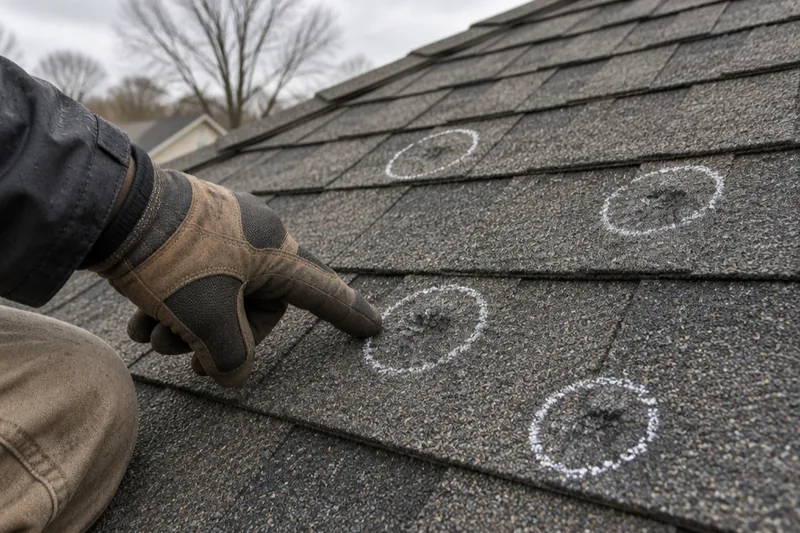
How storms damage El Paso roofs
El Paso's monsoon season runs from mid-June to the end of September, and its thunderstorms can drop hail of an inch or more in narrow bands. The National Weather Service has logged one-inch hail in Socorro, Fabens, Canutillo and northwest El Paso in recent seasons. Wind is the other half of the story. Spring wind storms and summer outflow gusts strip shingles, lift tile ridge caps, peel back edge metal and blow debris into scuppers.
| Roof | Hail damage looks like | Wind damage looks like |
|---|---|---|
| Asphalt shingle | Dark round bruises, missing granules, cracked mats | Lifted or missing tabs, creased shingles, exposed nails |
| Clay or concrete tile | Cracked, chipped or broken tiles | Displaced ridge and hip tiles, slipped field tiles |
| Foam with coating | Dents and punctures through the coating | Rarely affected, apart from debris impacts |
| Coated flat roof | Fractured coating, bruised membrane | Peeled edges, lifted flashing at parapets |
| Metal | Dents, chipped finish | Loose panels or trim, popped fasteners |
Signs to look for after a storm
- Pieces of shingle, tile or flashing in the yard
- Dented gutters, cooler housings, mailboxes or car roofs, which tell you hail size
- Granules washed onto the driveway below downspouts
- New ceiling stains in the days after the storm
- Debris piled in scuppers or valleys
How a storm damage inspection and repair works
- The roofer inspects each slope or section and marks impacts, often with chalk, photographing them with a scale reference.
- They check soft metals such as vents, flashing and coolers, which show hail size and direction.
- Openings are tarped or sealed if rain is likely.
- You get photos and notes describing what was found.
- Repairs are scheduled: replacing damaged shingles or tiles, recoating fractured coatings, patching foam and refastening flashing.
Insurance and storm damage
Many homeowners policies cover sudden hail and wind damage, subject to your deductible and policy terms, and treat gradual wear differently. Report the damage to your insurer promptly, keep dated photos and receipts, and ask the roofer for a written description of the damage. Be cautious with anyone who knocks on doors after a storm offering to waive deductibles. Our guide to insurance and roof leaks in Texas has more.
What affects repair cost and time
- How many slopes or sections are damaged
- Roof type and whether matching materials are available
- Hidden damage to decking or underlayment
- Demand after a big storm, since roofers' schedules fill quickly
Before the roofer arrives
Take photos of hailstones next to a coin or ruler if you can, and note the date and time of the storm. Photograph dented items around the property. Don't climb on a storm-damaged roof.
When it is an emergency
If the storm opened the roof or water is coming in, call for emergency roof repair first.
Checking for wind damage from the ground
Walk around the house with binoculars after a wind storm. Look along the ridge and the edges of each slope for shingles that sit higher than their neighbours, missing ridge caps, or a line of a slightly different colour where tabs have flipped. On flat roofs, look at the parapet caps and the metal edge trim for anything bent or lifted.