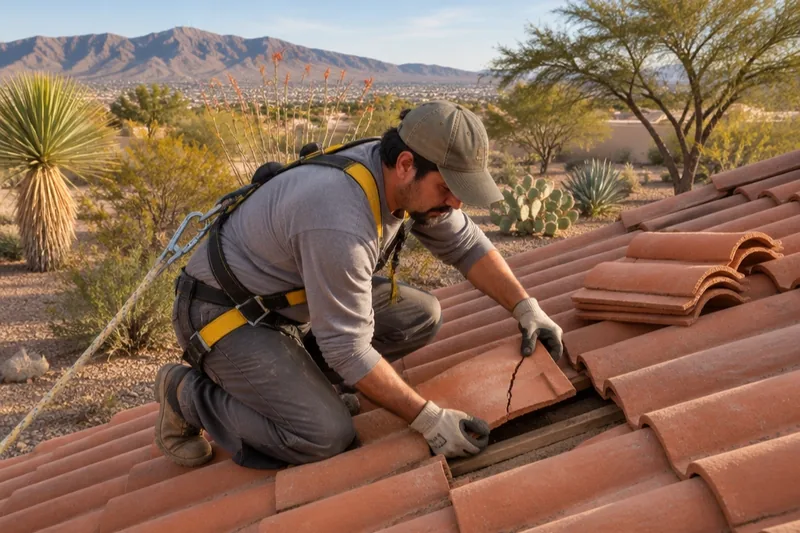
How tile roofs keep water out
Tile roofs are popular across West El Paso, the Upper Valley, Santa Teresa and newer streets on the Far East side, and they suit the Southwestern look. Barrel clay tile, flat and S-profile concrete tile shed most of the water and shield the roof from sun. The real waterproofing is the underlayment beneath, plus the metal flashing at valleys, walls, chimneys and vents. In El Paso heat that underlayment can dry out and crack well before the tiles show any wear. So a tile roof that looks fine from the street can still leak.
Signs your tile roof needs repair
- Cracked, chipped or broken tiles, often after hail or someone walking on them
- Tiles that have slipped down, leaving gaps
- Mortar at ridges or hips that is cracked or falling out
- Stains on ceilings below valleys or where the roof meets a wall
- Debris such as pecan leaves and dust collecting in valleys
- Rusted or lifted valley metal
How tile roof repair is done
Tile is brittle, and an inexperienced worker can break more than they fix. A tile roofer walks only on the strongest points of the tile, or uses pads. For a broken tile, they lift the surrounding tiles, remove the broken piece and its fasteners, slide in a matching tile and secure it. For a leak, they remove a section of tile around the source, repair or replace the underlayment and flashing, then relay the tiles. Old tiles are stacked and reused where they are sound. Where underlayment has failed across the whole roof, the usual fix is a lift-and-relay: tiles come off, new underlayment and battens go on, and the same tiles go back.
Clay versus concrete tile
| Feature | Clay tile | Concrete tile |
|---|---|---|
| Look | Classic terracotta, colour runs through the tile | Many profiles and colours, surface colour can fade |
| Weight | Lighter than concrete | Heavier, needs adequate framing |
| Sun and heat | Very UV stable | Durable, surface may weather over time |
| Breakage | Brittle under foot traffic | Somewhat tougher, can still crack |
| Matching for repairs | Older profiles can be hard to source | Easier to match common profiles |
What affects cost and time
- Number of tiles to replace and whether matches are available
- How much underlayment needs replacing, from a valley section to the whole roof
- Roof pitch, height and safe access
- Ridge and hip mortar or fastening work
- Flashing replacement at walls, chimneys and skylights
Replacing a few tiles can take an hour or two. A valley repair often takes a day. A full lift-and-relay usually takes several days.
Before the roofer arrives
Keep everyone, including well-meaning relatives, off the tiles, since walking on them causes many of the breaks roofers see. If you have spare tiles from the original install in the garage, set them out. They are the best match.
When it is an emergency
Wind can strip tiles from a ridge or hip, leaving the underlayment exposed. If that happens before a storm, ask for emergency roof repair so the area can be covered.