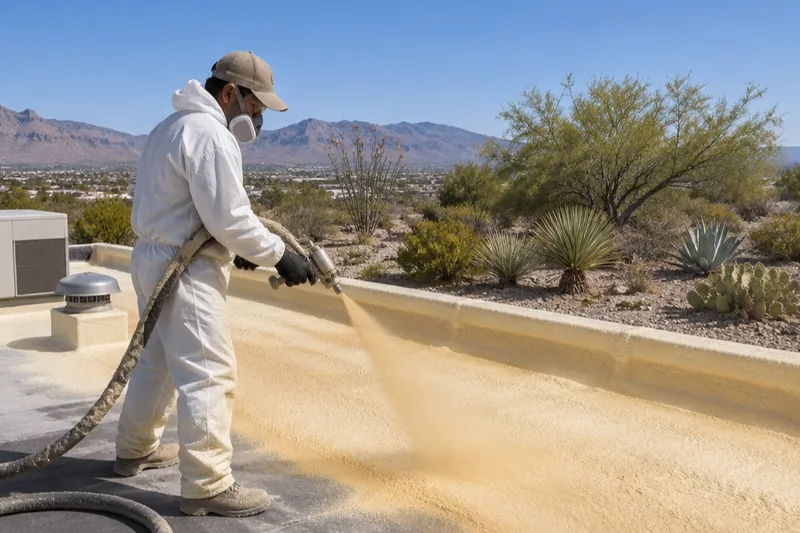
How a foam roof works
Two liquid components are mixed at the spray gun and expand to roughly thirty times their volume on contact, bonding to the roof deck, the existing roof and the inside of the parapet in one piece. There are no seams to open up. Foam also insulates, so it can lower heat gain through the roof. And because it is sprayed, the crew can build up extra thickness to create slope toward scuppers, fixing ponding at the same time.
The catch is ultraviolet light. Foam on its own turns from cream to orange to brown and slowly erodes in El Paso sun. It must be covered with an elastomeric, silicone or urethane coating, sometimes with granules embedded for durability. Keeping that coating intact is the whole job of maintaining a foam roof.
Signs a foam roof needs work
- Coating worn through, showing tan, orange or brown foam
- Foam that feels crumbly or powdery underfoot
- Small pits and holes, often from birds pecking or hail strikes
- Blisters or soft spots that may hold water
- Splits where the foam meets the parapet or a metal flashing
- Ponding in low spots after storms
Foam roof repair, recoat or new foam?
| Work | When it fits | What it involves |
|---|---|---|
| Spot repair | A few holes, bird damage or a small blister | Cut out damaged foam, refill with foam or sealant, coat the patch |
| Recoat | Foam is sound and dry but the coating is thin | Clean, repair small defects, apply new coating at the right thickness |
| New foam over existing | Foam is eroded but deck and insulation are dry | Remove loose material, spray a new foam layer, coat |
| Tear-off and new foam | Wet insulation or deck damage across large areas | Remove the old roof, repair the deck, spray and coat a new system |
How foam is installed or repaired
Foam is sensitive to conditions. Crews spray when the surface is clean and dry, the temperature is in range and wind is low, because overspray carries a long way. Expect masking of walls, windows, vehicles and coolers. The foam goes on in passes to reach the thickness needed for slope and insulation. The coating goes on in one or more coats, usually within a day or two, before UV starts to degrade the surface. For repairs, the roofer cuts a clean, bevelled hole around the damage so new foam bonds to sound material.
What affects cost and time
- Roof area and the foam thickness needed
- How much old roofing must be removed
- Coating type: silicone, acrylic or urethane, with or without granules
- Number of parapets, curbs, vents and drains
- Weather windows. Spraying waits for low wind and dry days
A recoat on a typical home is often a day or two. A new foam roof usually takes a few days.
Before the crew arrives
Move cars well away from the house and cover anything outdoors you care about. Close windows and switch off the swamp cooler and HVAC fresh-air intake. Tell neighbours, especially on shared walls.
When it is urgent
Foam roofs rarely fail all at once, but hail and bird damage can open holes that leak in the next storm. If water is coming in, call for leak repair and plan the recoat for dry weather.