What counts as a roofing emergency
Not every leak needs a roofer at midnight, but some do. Call straight away if you see any of these:
- Water running through a light fixture, ceiling fan or electrical box
- A ceiling bulging or sagging with trapped water
- A hole, or missing roofing, after a wind storm or a fallen tree limb
- A leak getting quickly worse during a monsoon storm
- Large sections of shingles, tiles or flashing blown off
- Hail damage that has broken through the roof surface
If there is any sign of electrical danger, switch off the circuit at the breaker and keep people out of the room. If there is structural collapse or fire, call 911 first.
What an emergency roof repair involves
The goal is to stop more water getting in. Once it is safe to get on the roof, the roofer will usually:
- Find the opening or failed area from above.
- Clear debris and any loose material that could tear a cover.
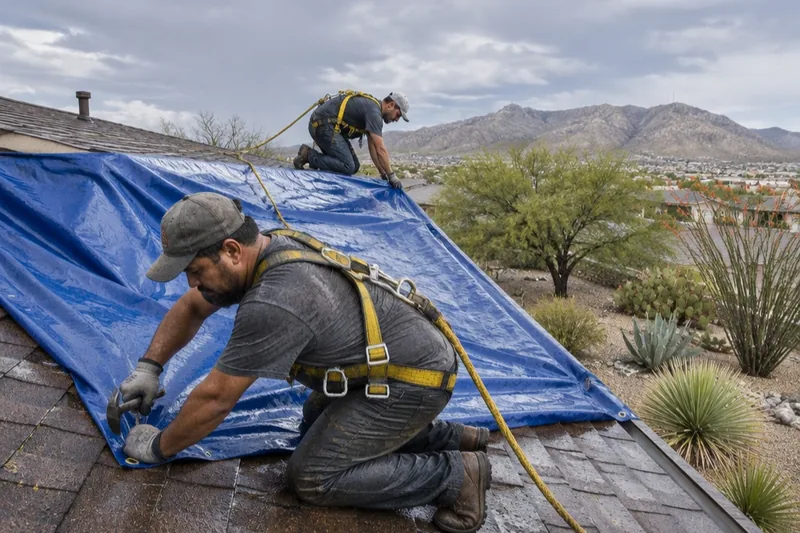
- Lay a heavy-duty tarp or membrane over the damage, extending well past it and up over the ridge or parapet so water sheds off.
- Fasten the cover with battens or weights so desert wind can't get under it.
- Seal smaller openings, like a torn flashing or split seam, with a temporary compatible sealant.
- Photograph the damage for your records and any insurance claim.
Why El Paso storms cause sudden roof damage
Monsoon thunderstorms from mid-June to late September can drop heavy rain and hail in a narrow band. One neighbourhood gets hit while the next stays dry. The strongest gusts on record at El Paso's airport reached 84 mph, and spring wind storms regularly lift shingles and peel back flashing. Outflow winds ahead of summer storms do the same. Flat roofs with blocked drains can fill like a pan in minutes.
What affects the cost of an emergency call
Emergency work is priced by each independent roofer. Expect the price to depend on the time of the call, how big the area is that needs covering, roof height and pitch, and the materials used. A temporary repair is a separate job from the permanent fix that follows. Ask both questions on the phone: what will the temporary protection cost, and how will the permanent repair be quoted?
What to do while you wait
- Move people, pets and valuables away from the leak and catch the water.
- Turn off electricity to any wet fixtures at the breaker.
- Do not climb onto a wet or storm-damaged roof yourself.
- Take dated photos of the inside and of the roof from the ground.
- Keep receipts for anything you buy to protect the home, since insurers often ask for them.
After the emergency
A tarp is a short-term fix. Once the weather clears, the roof needs a proper repair, and sometimes a full inspection, to check for damage the storm left elsewhere. Next steps: hail and wind damage repair and roof leak repair.