This guide explains how home insurance commonly treats roof leaks. It isn't legal or insurance advice, and policies vary a lot. Read your own policy, and ask your insurer or agent about your situation.
The distinction that matters most: sudden vs gradual
Most homeowners policies are built around sudden, accidental damage from a covered peril. For roofs, that usually means events like hail, windstorms or a tree falling on the house. What they typically do not cover is damage that develops over time: a roof wearing out, a leak that has been dripping for months, or damage from lack of maintenance.
| Cause of leak | Often treated as | Notes |
|---|---|---|
| Hail breaks shingles or tiles | Potentially covered | Subject to deductible; some policies have separate wind and hail deductibles |
| Wind tears off roofing | Potentially covered | Document the storm date and damage |
| Tree or debris falls on roof | Potentially covered | Protect the home from further damage |
| Old, worn-out roof leaks | Usually excluded | Wear and tear is a standard exclusion |
| Slow leak ignored for months | Often excluded | Gradual leakage and mould may be limited or excluded |
| Blocked drains from poor upkeep | Often disputed | Maintenance records help |
The roof itself and the interior damage can be treated differently. Some policies pay for interior water damage from a sudden leak even if they won't pay to fix a worn roof. Others settle older roofs on an actual cash value basis, meaning depreciated, rather than replacement cost. Your declarations page and policy wording will say which applies.
What to do when the roof leaks
- Stop further damage. Policies usually expect you to take reasonable steps. Catch water, move belongings and get the roof tarped. Keep receipts. See emergency roof repair.
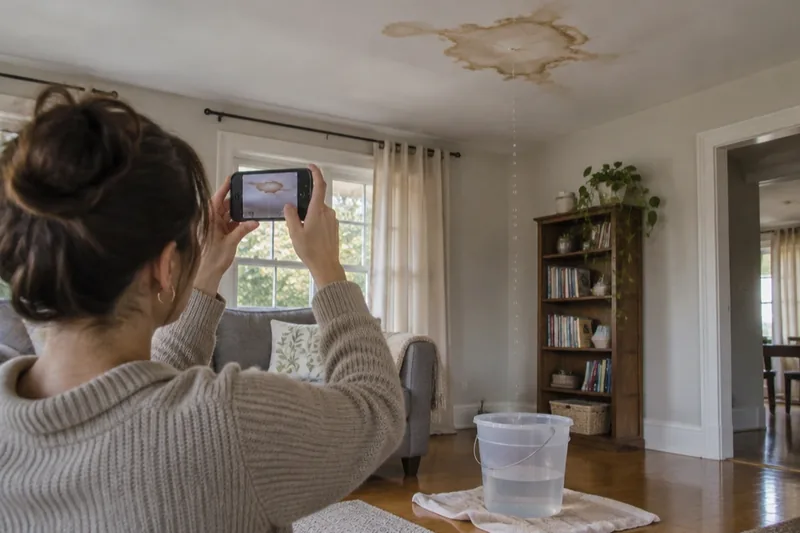
- Document everything. Dated photos and video of the inside damage, the roof from the ground, hail stones next to a coin, dented gutters and cooler housings.
- Write down the date and time of the storm. Local weather reports or National Weather Service storm reports can help corroborate it.
- Get a roofer's inspection. Ask for photos and a written description of the damage they find.
- Report the claim promptly. Policies have deadlines for reporting, and delays can complicate claims.
- Be there for the adjuster's visit if you can, and share your roofer's findings.
Hail and wind in El Paso
El Paso's main roof-damaging weather is monsoon thunderstorms from mid-June to the end of September, which can bring hail, and spring wind storms that lift and tear roofing. Damage is often localised, so one side of town can be hit hard while another is untouched. If neighbours are getting roofs inspected after a storm, it is worth having yours looked at too. See hail and wind damage repair.
Watch out for storm chasers
- Be cautious with anyone going door to door after a storm offering to pay or waive your deductible.
- Don't sign anything that hands control of your claim to a contractor without understanding it.
- Avoid paying large sums upfront.
- Check insurance. In New Mexico, check the roofer's state licence too.
Keeping your roof insurable
Regular maintenance protects you on both fronts: it prevents leaks, and it shows that damage was sudden rather than neglect. Keep receipts for inspections, drain clearing and recoats. A pre-monsoon roof inspection is a simple record to keep.
Where to get help
Start with your insurer or agent. The Texas Department of Insurance publishes consumer information about homeowners insurance and claims, and can help if you have a complaint about how a claim was handled.
Common policy terms you'll see
- Deductible. The amount you pay before coverage starts. Some Texas policies have a separate or percentage-based deductible for wind and hail.
- Actual cash value (ACV). Payment based on the depreciated value of the damaged roof, so an older roof pays out less.
- Replacement cost value (RCV). Payment based on the cost to replace with like kind and quality, sometimes paid in stages once the work is done.
- Wear and tear exclusion. Damage from age, deterioration or lack of maintenance.
- Cosmetic damage exclusion. Some policies exclude dents that don't affect how the roof works, which is common with metal roofs.
What a roofer can and can't do in a claim
A roofer can inspect, document damage, provide photos and a written description, and give a repair estimate. Decisions about coverage are made by your insurer under your policy. Be cautious of any contractor who offers to negotiate your claim on your behalf. Licensed public adjusters do that work in Texas, and contractors acting as adjusters can create problems for you.
Keep a simple roof file
A folder or phone album with receipts for inspections, drain clearing, coatings and repairs, plus a few dated photos of the roof in good condition, makes it much easier to show that later damage was sudden.