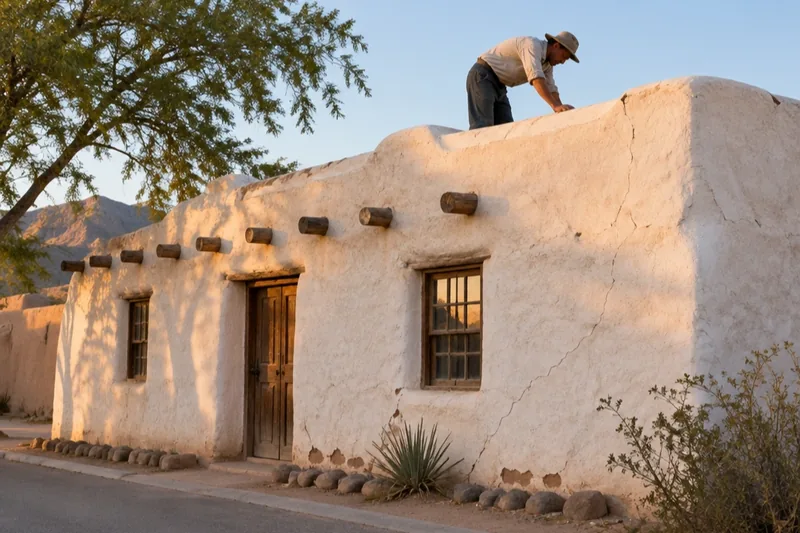
Protecting historic adobe
San Elizario, a city of about 10,000 people (10,126 at the 2020 census) in ZIP code 79849, is one of the most historic places in the region. Its historic district along the Mission Trail and Socorro Road includes the San Elizario Presidio Chapel and blocks of adobe buildings. Many homes in town still have thick adobe or block walls, flat roofs, parapets and canales.
Adobe is durable in a dry climate, but only if water is kept out from above. The roof and parapet are the adobe wall's hat. A cracked cap, a failing canale or a leaking parapet joint lets water into the top of the wall, where it softens the earth inside the plaster. The damage can stay hidden until plaster bulges or falls.
What roofers check on San Elizario homes
- Parapet caps and the top of the plaster for cracks or hollow spots
- Where each canale passes through the parapet, and whether it throws water well clear of the wall
- The roof surface, often coated over older built-up roofing
- Low spots where water ponds against a wall
- Interior plaster under the roof edge for staining or salt deposits
Historic buildings need the right materials
Modern cement-based stucco and some sealants trap moisture in adobe and can make problems worse. On historic buildings, ask the roofer about compatible materials, and whether a plasterer with adobe experience should be involved. For buildings in the historic district, check whether exterior changes need approval before work starts.
Newer homes and farm buildings
Away from the historic core, San Elizario has newer stucco homes with pitched roofs, manufactured homes and agricultural buildings with metal roofs. Those get the same wind, hail and sun damage seen across the Lower Valley. See metal roofing for barns and sheds.
Before you call from San Elizario
Tell the roofer whether the building is adobe, block or frame, and whether it is in the historic district. Mention any plaster damage you've noticed inside. It helps them bring the right materials and, if needed, line up a plasterer.