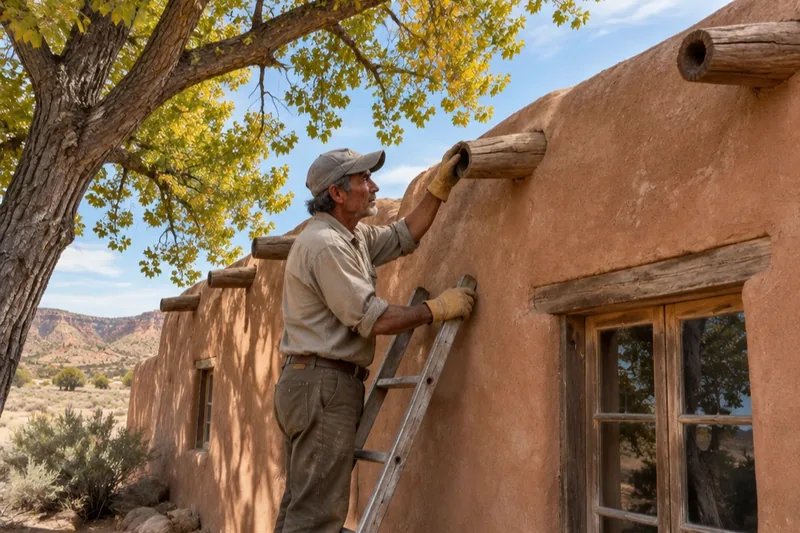
Canales, adobe and the valley's roofs
The Lower Valley follows the Rio Grande southeast of downtown, through Ysleta, which grew up around the Ysleta Mission, and on toward Socorro along Alameda Avenue and North Loop Drive. Irrigation canals still cross the area. Houses range from historic adobe and stuccoed block to mid-century homes, almost all with flat roofs drained through canales. Those are the wooden or metal spouts that throw water off the roof and away from the wall.
Canales are traditional and effective, but they are also the most common leak point. The joint where the canale passes through the parapet has to be sealed perfectly, and wooden canales rot over time. When one fails, water runs into the wall and shows up as staining on interior plaster or crumbling at the base of an adobe wall.
Common Lower Valley roof issues
- Leaking or rotted canales, and gaps where they meet the parapet
- Cracked parapet caps and stucco letting water into adobe or block walls
- Multiple layers of patches on older flat roofs
- Ponding where roof framing has sagged with age
- Cottonwood and other tree debris blocking drains near the river
Adobe needs a dry top
Adobe walls hold up for generations as long as water stays out of them from above. A leak at the parapet or canale can soften the mud brick inside a stucco skin long before you see it. If you notice bulging or hollow-sounding stucco near the top of a wall, or white salt deposits on interior plaster, mention it when you call. The roofer may recommend having a plasterer or adobe specialist look as well.
Replacing canales
Wooden canales can be replaced in kind, or with lined or metal canales that last longer. The key is how they are flashed into the parapet and roof. Ask the roofer to explain the detail they will use.
Monsoon readiness
Before mid-June, clear every canale and scupper and check that water lands away from the foundation. A canale dumping water against a wall base does as much harm as a roof leak.